
Crate Training Your Puppy: How to Build Confidence, Routine, and Security
One of the single most valuable training tools we have available is the dog crate. It is not just a training tool either. It is a den, a safe space, and a place of calm if you train it to be.
Crate training starts, hopefully, with the breeder. Your puppy should have access to crates, even without doors, at just a few weeks old. Almost always, they will choose to use them, sleep in them, bring a toy into them, and explore them. Puppies do not start out being afraid of or having an aversion to crates. This usually happens because they are being put into a crate that has not yet become a familiar space, and they are being put in there either as punishment or before they are mentally ready for it.
There are a few things that make crate training successful:
Exposure, timing, intent, and location.
Exposure begins around 4 to 5 weeks old, ideally. By the time the puppy leaves their breeder, a crate should be nothing new. This already gives you a huge leg up on the process. Ideally, the puppy would have had some yummy treats, chew toys, and meals in the crate, and hopefully some naps in the crate with the door closed, or even spent several nights in the crate before leaving. Ideally, the puppy would also have been in a car crate so that even though the car is a new experience, the crate is not, and that small piece of familiarity is transferable.
Timing is important because putting a puppy that is not tired and is hyped up into a crate is not going to go well. Puppies should already be mentally and physically tired when put into their crates. If I wake up in the morning, let my 9 week old puppy out, and put her right back in her crate for her meal, she will likely be ready to come out and play shortly after. This can lead to barking in the crate. I may put her back in for her meal, but then she is out playing for an hour. Before she goes back in while I do my barn chores, we do 5 minutes of some kind of training, like touch or name game. Then I pick a rotating chew toy that she only gets during crate time, and she goes in before I can even ask, ready for that toy she is already anticipating. I can then go do my morning stuff without any fuss from the puppy. I know she is safe and secure, and all her needs have been met.
Intent has to do with why we are crating in the first place. Are we housebreaking, keeping a puppy from chewing furniture or cords, or providing structure? Yes to all of those. Those are the intentions. This kind of routine gives a puppy emotional stability and security. They know what to expect and when to expect it. This takes the guesswork out of their lives and allows them to build confidence through anticipation.
There may be times when your dog will need to be crated without exception, such as after surgery, during transport, in a boarding facility, on an airplane, at the vet, at the groomer, at dog shows, during a quarantine, or while being dried after a bath. The list goes on. If your puppy does not have the internal sense of security that comes from being comfortable in a crate, all of these situations become much more stressful and sometimes even dangerous.
The location of your crate also matters. Initially, when you bring your puppy home, being crated near you is better for your puppy. It builds security and trust in the crate by having you nearby. Gradually, you can start to move it farther away to the final location you want in your home, but I would start with the bedroom during the first few days or weeks. Ideally, you would also want the crate near an easy access point to go outside for potty breaks.
So does my dog have to be crated like this forever?
No. But you are building the foundation now that will always make the crate, or any crate, feel like home.
Once your puppy is fully housebroken, past all the teething phases, and you feel you can leave your puppy unattended in the home, you do not have to crate your dog. But they will likely choose the crate if it is there. For some dogs, crating is always the best answer, and that is fine too.
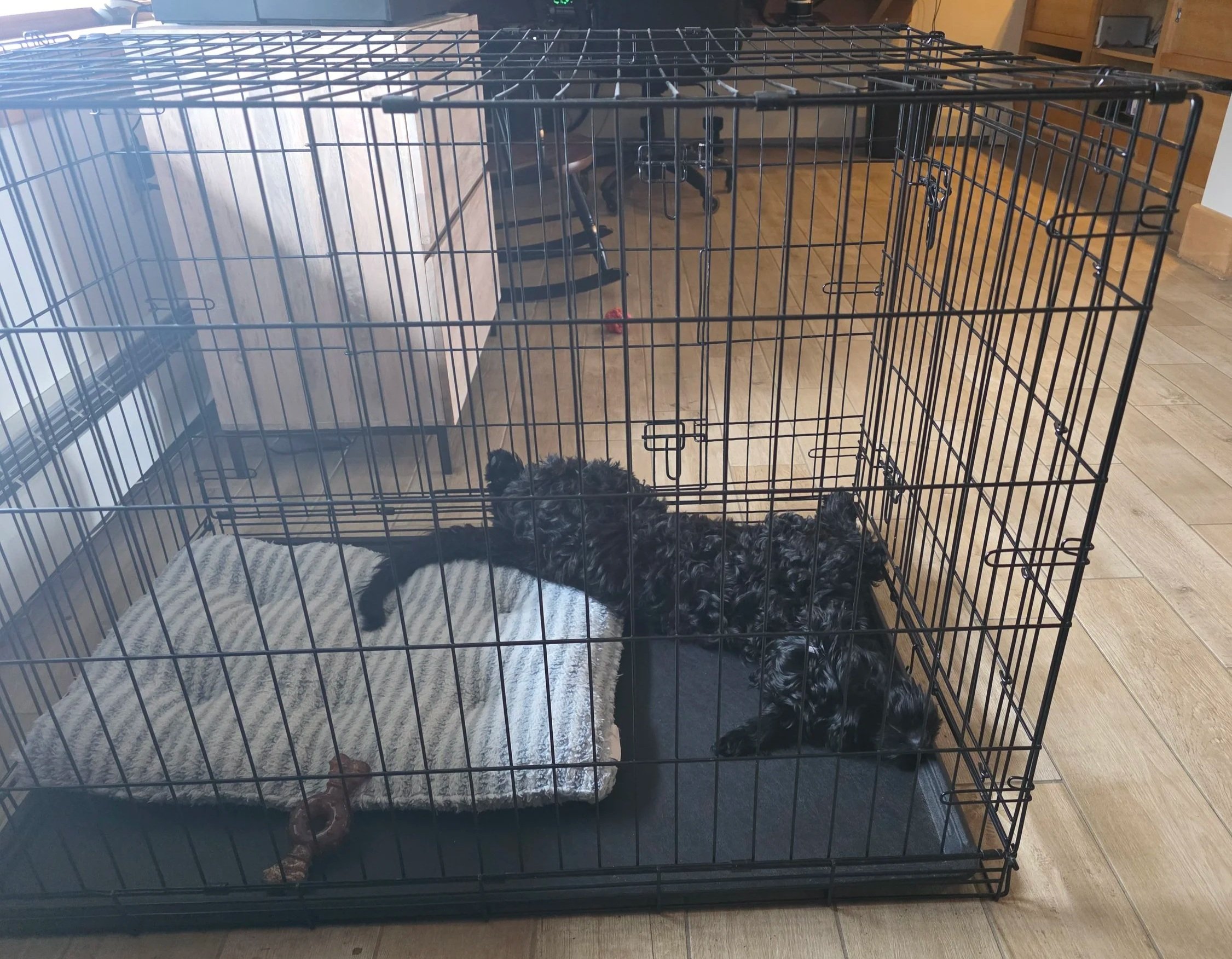
Main takeaways:
Make sure your puppy has pottied, is not thirsty or hungry, and is tired before going into the crate. This may require some planning and timing on your part.
Have special bones or chew toys that are only used for crate time, and rotate them so there is always something that feels new.
Feed all meals in the crate while they are puppies.
Provide a bed of some kind and a few other toys.
Keep the crate in a location near you at first, then move it gradually to your ideal location.
If your puppy still cries in the crate, it is often looking for reassurance, release, or attention. If all of your puppy’s needs have been met, then ignoring the crying for a bit is okay. Usually they will settle after a while, and those barks and cries will lessen over time. This takes some patience, but the payoff is huge. Only let your puppy out of the crate if they are hurting themselves or if one of those needs has not been met and they have a legitimate reason for crying.
An additional tool for puppies who really do not like a crate, even after all of these steps have been taken, is a Treat and Train, which is an automated training feeder. You can time it or use a remote to drop kibble into the crate while your puppy is being quiet. This acts as a reinforcement reward. Timing here is crucial, and you have to be sure the puppy is calm when those treats are dropped so you do not accidentally reward barking or whining.
Using a Pen instead of a crate
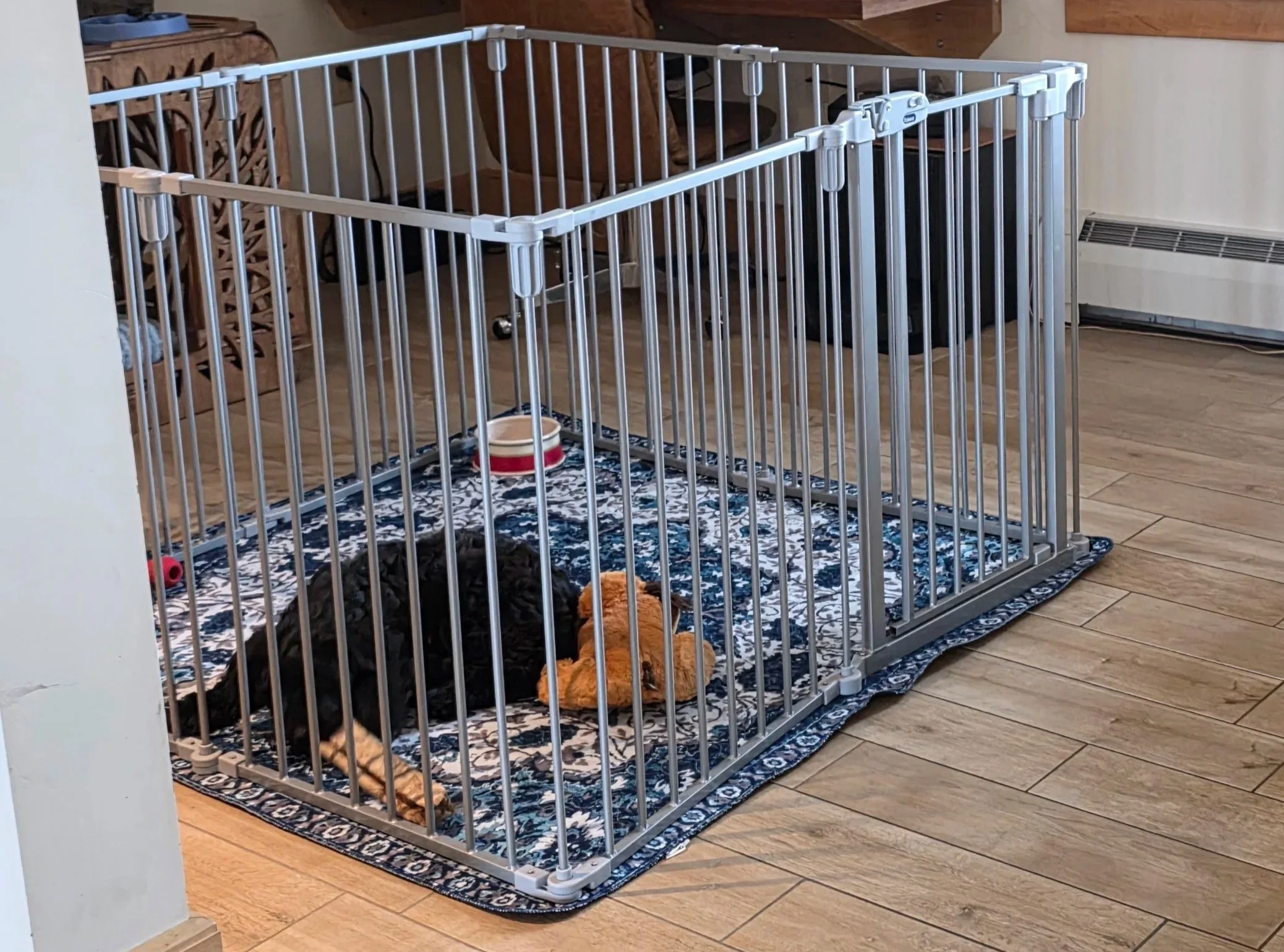
If you prefer to use a pen ( ex-pen or some other containment pen), the approach is the same except you will want to make sure the pen is not too large. Puppies naturally do not want to soil where they sleep, so the smaller the area, the more likely they will “hold it”. If given too much real esate, they may choose a corner to pee in which will then make your housebreaking period more lengthy.
Be sure that your pen is tall enough that your puppy can’t get out. You would be suprised at how high they can climb.
Choose pens that don’t have cross bars and only vertical bars or smooth walls to prevent climbing.
We usually start with a pen because we have multiple puppies and then transition to a large crate once they are larger.
Why I don’t recommend baby-gating a room
This is your least secure option. It enables your puppy to access walls, doors, mouldings, items and other potential choking/toxic hazards. It also gives them too much space, making housebreaking more difficult.
In the end, crate training is not really about confinement. It is about teaching your puppy how to feel safe, settle, and be comfortable on their own. When done thoughtfully, the crate becomes less about restriction and more about security. It gives your puppy a familiar place in a world that is still very new to them. That sense of predictability and comfort can carry over into so many parts of life, both at home and out in the world. Like most things in puppy raising, a little intention and consistency in the beginning can make a very big difference later on.