Socializing Your New Puppy Without Overdoing It
When our puppies leave for their new homes at 8 weeks of age or older, they have had a wonderful start here with us. They have been raised on our property with their littermates, our adult dogs, and all the normal sights and sounds of daily life in our home. By the time they leave, they have had their first vaccines, but they are still not fully protected yet from illnesses such as parvovirus, distemper, leptospirosis, and other contagious diseases.
That is because one vaccine does not create full immunity. Puppies need their booster series, given over time, to build proper protection. Yes, if we kept puppies until 12 weeks, they would leave with more of that vaccine series completed. But they would also miss out on something equally important: those precious early weeks of bonding, trust building, and learning with their new family.
Puppies are very ready for one on one life at this age. By 8 weeks, they have learned a great deal from their mother and littermates. They understand litter dynamics, they are weaned, and they are ready to begin building their relationship with their own people. What a breeder usually cannot realistically provide for a whole litter of puppies is a wide variety of individualized outside experiences. That part now becomes the new family’s job, and it matters a lot.
The most important socialization window happens before about 16 weeks of age. That does not mean socialization ends at 16 weeks, not at all. It just means those early weeks are especially important in shaping how a puppy feels about the world.
When people hear the word socialization, they often think it means taking a puppy everywhere and having them meet everyone. A trip to a store, a friend’s house, the park, or a public event sounds like a great idea on paper. But how those experiences happen matters just as much as the experience itself.
One of the biggest mistakes people make with a young puppy is assuming that being touched, held, passed around, and fussed over by lots of people is automatically a good thing. It is innocent and well meaning, of course. Everyone loves a puppy. But not every puppy enjoys all that handling, and not every puppy wants to interact in that way, especially in a new environment. If a puppy is overwhelmed and cannot comfortably say “that’s enough,” those experiences can stick with them. Sometimes what looks like “friendly socialization” in the moment can actually create stress or discomfort that shows up later.
Good socialization is not about throwing everything at a puppy. It is about helping them experience the world in a way that feels safe, positive, and manageable.

Because puppies are not fully vaccinated yet, public dog areas should be off limits for now. That includes dog parks, rest stops, pet relief areas, sidewalks heavily used by dogs, and public parks where many dogs frequent the ground. Even pet store floors can be risky for a very young puppy. If you do go somewhere public, bringing a blanket, using a stroller, carrying your puppy, or sitting in the back of an open vehicle can be much safer options. After the full vaccine series is complete, I still like to give it a little extra time before allowing normal ground access in high traffic dog areas.
The good news is that there are still plenty of excellent ways to socialize safely.
Take your puppy for car rides and sit together in a parking lot where they can watch carts, cars, people, and general activity from a safe distance. Open the tailgate or sit with the car door open and let them quietly take it all in. You can also walk around lower risk areas with them in your arms or in a stroller.
Sit on a blanket in places where life is happening nearby. A college campus, a beach, a school pickup area, a quiet town center, or a park where children are playing in the distance can all be great options. Your puppy does not need to be in the middle of the action to learn from it. Watching the world go by while feeling safe with you is very valuable.
Visit dog friendly stores with your puppy in a stroller or cart if appropriate, or carried if they are small enough. The goal is not to make them the star of the show. The goal is calm exposure.
If you visit someone’s house, bring a crate or a safe place for your puppy to settle. Let them explore at their own pace. If they want to approach people, wonderful. If they would rather observe first, that is perfectly fine too. Let the puppy lead. Respectful exposure builds confidence. Pressure does not.
One of the best things you can do is reward your puppy for noticing the world calmly. A strange noise? Treat. A person walks by? Treat. Shopping cart rattles past? Treat. Children laughing in the distance? Treat. This helps build the puppy’s association that new things are safe and even enjoyable. You are not bribing them. You are teaching them how to feel.
It is also important to expose puppies to more than just people. Socialization includes surfaces, sounds, objects, and everyday life skills. Let them walk on gravel, grass, wood, tile, and a wobbly board. Let them hear vacuums, clanging pans, doorbells, traffic, lawn equipment, and thunder recordings played softly. Introduce hats, umbrellas, canes, men with beards, children running, bicycles, and all the odd little things humans do that puppies find very suspicious. The world is full of silly surprises.
And just as important as exposure is recovery. Puppies need time to process. Socialization is not about packing every day with activity until your puppy is exhausted. A tired puppy is not always a confident puppy. Often, short successful outings are much better than one big overwhelming adventure. Think quality over quantity.
Try to work at your puppy’s comfort level. That is a big one. The sweet spot is where your puppy notices something new but can still stay engaged with you, take treats, recover easily, and remain curious rather than shut down. If they are freezing, refusing food, trying to escape, trembling, or completely overwhelmed, that is too much. Simply create more distance and make it easier. There is no prize for pushing through.
I do think it is important to commit to getting your puppy out regularly. A couple of purposeful outings per week is a great baseline, and more brief positive exposures built into normal life is even better. Then keep going after 16 weeks. That is the part people often forget. Puppies do not get “fully socialized” and then stay that way forever. Confidence needs maintenance. Continued, thoughtful exposure helps prevent regression later.
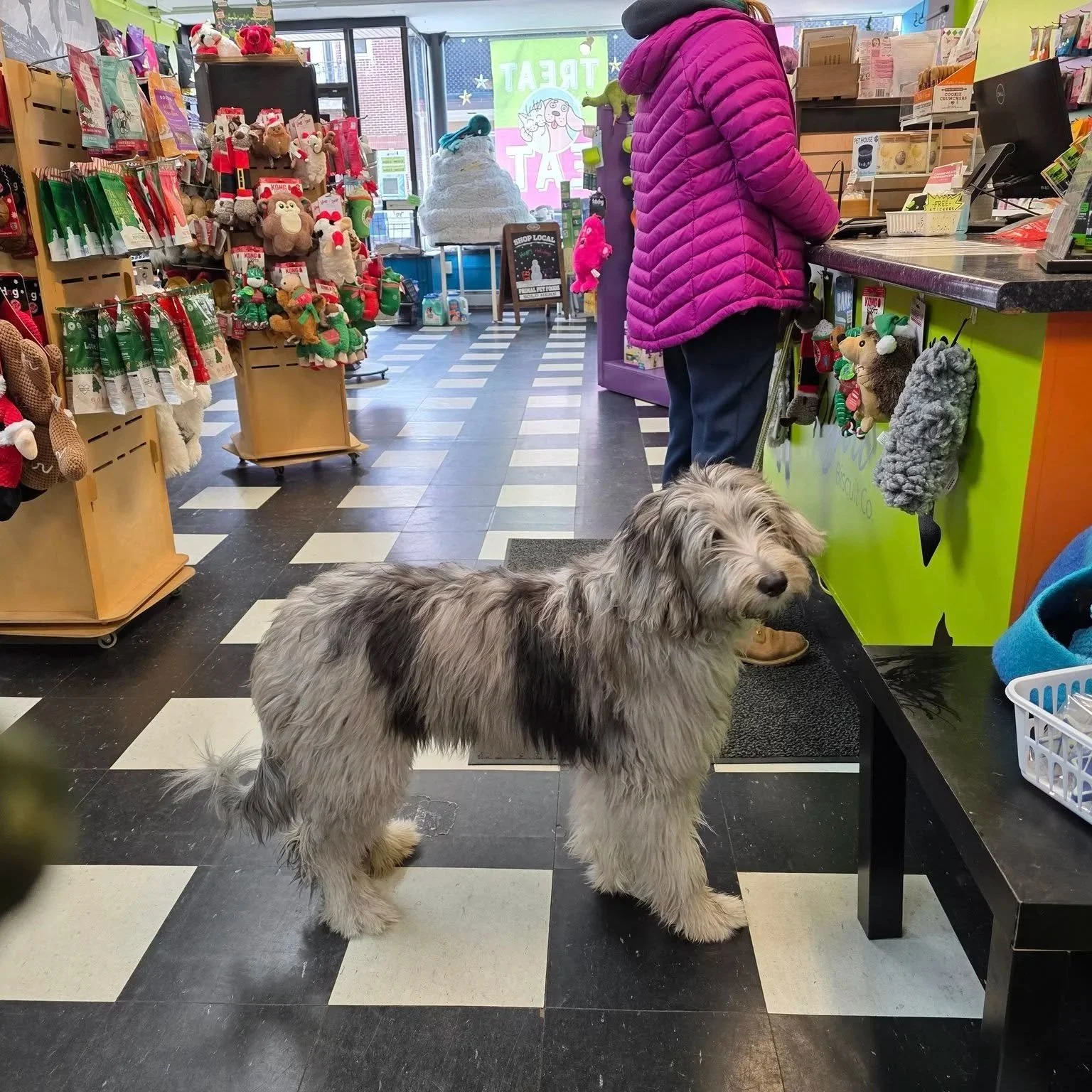
As your puppy becomes more comfortable and is happily taking treats, recovering quickly, and staying relaxed in different places, you can gradually allow a bit more interaction with people. Even then, I like to keep it structured. It is perfectly fine to say, “My puppy is in training,” or “Please let her come to you first.” That is not rude. That is smart puppy raising.
And one more thing: socialization is not the same as forced interaction. Your puppy does not need to greet every dog, every child, every stranger, or every passing human who says, “Ohhh, can I pet him?” In fact, they will often learn more from calmly observing the world than from being put in the middle of it.
If your puppy struggles with car sickness, do not give up on socialization. It is still important. You may just need to get creative and keep trips shorter and more strategic while working through that issue.
In the end, the goal is not to create a puppy who thinks every stranger is their long lost best friend. The goal is a puppy who can move through the world feeling safe, stable, and confident. Exposure matters. Thoughtful exposure matters even more.