Drying a Bergamasco: The Part Nobody Warns You About
When people ask about Bergamasco grooming, they usually want to know about the coat. Does it shed? Do you brush it? How do the flocks form? Does it smell? Will my house look like the forest floor?
All fair questions.
The Bergamasco coat is one of the first things people notice about the breed, so naturally it is also one of the first things people ask about. But one part of coat care that does not always get enough attention is drying.
It sounds like such a small, boring thing. Dry the dog. How complicated can that be?
With a Bergamasco, it is worth understanding before you are standing there with a wet adult dog, six towels, a fan, and regret.
A Bergamasco coat is not difficult once you understand it, but it is different. And different does not mean bad. It just means you have to adjust your expectations a little.
A Bergamasco should not and doesn’t have to smell. Here is some information to help you understand what causes and how to prevent the dreaded ( no pun intended) mildewed coat.
The Coat Holds Moisture
A Bergamasco coat is meant to protect the dog. It is not just decoration, and it is definitely not a costume with a dog somewhere underneath. The coat has different textures, and as the adult coat develops, it can hold moisture much longer than people expect.
This does not mean the coat is impractical. It means you have to understand what you are living with.
A damp Bergamasco is not like a damp short-coated dog who runs around for twenty minutes and is magically dry. Depending on the age of the dog, the density of the coat, the weather, and how wet the dog is, moisture can sit in that coat for a long time. Sometimes hours. Sometimes longer.
That is where drying becomes important.
Nobody wants a stinky damp barn rug sleeping on their couch, and more importantly, the dog should not be left sitting in a coat that has not had a chance to dry properly.
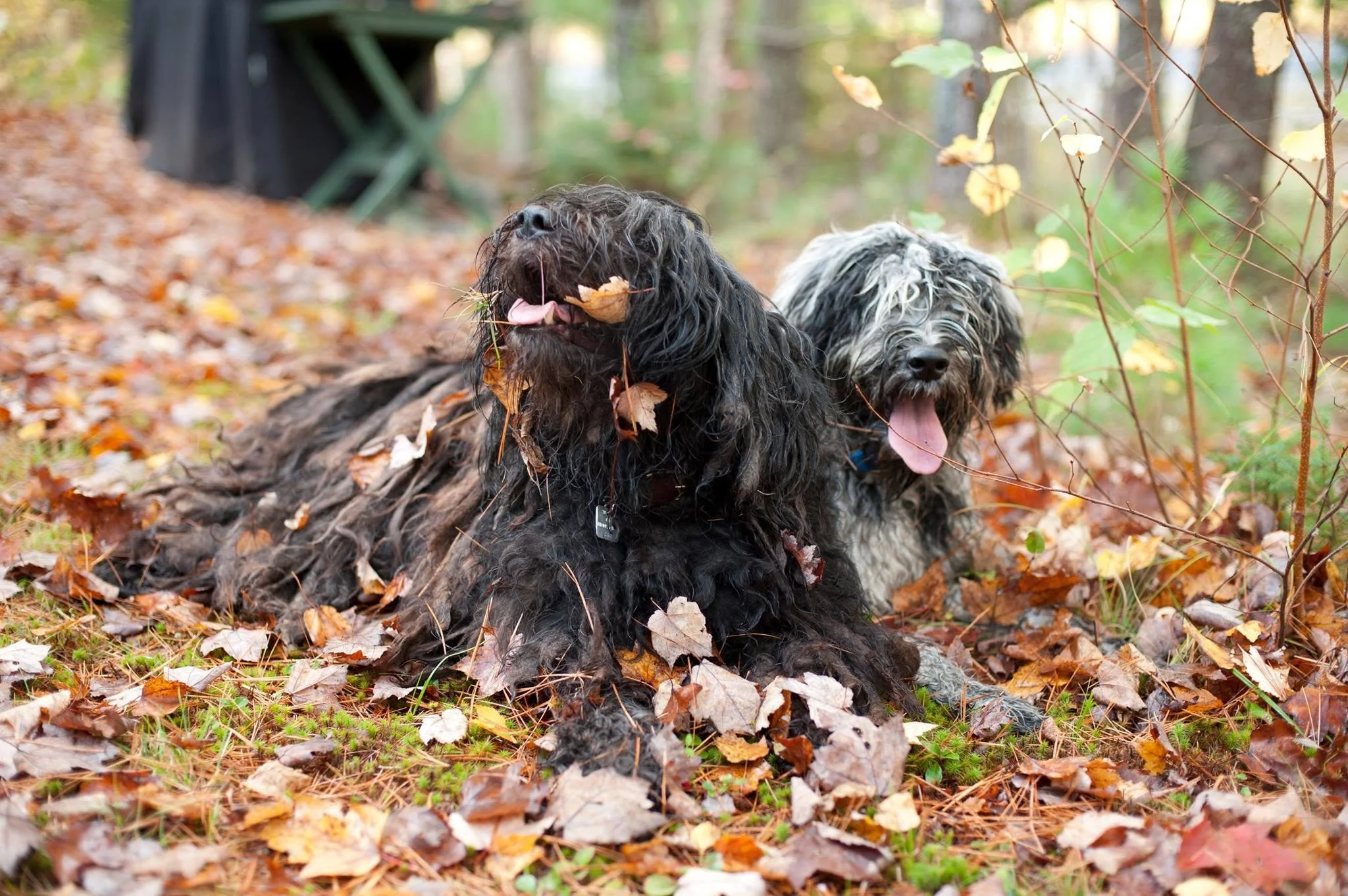
Bergamascos in fall. Bergamascos can be reverse mops, bringing the forest floor into your home. A slicker brush will get the leaves and pine needles out but a good shake will usually get 95% of it off naturally. Although the leaves are damp, this is not enough moisture to impact the coat.
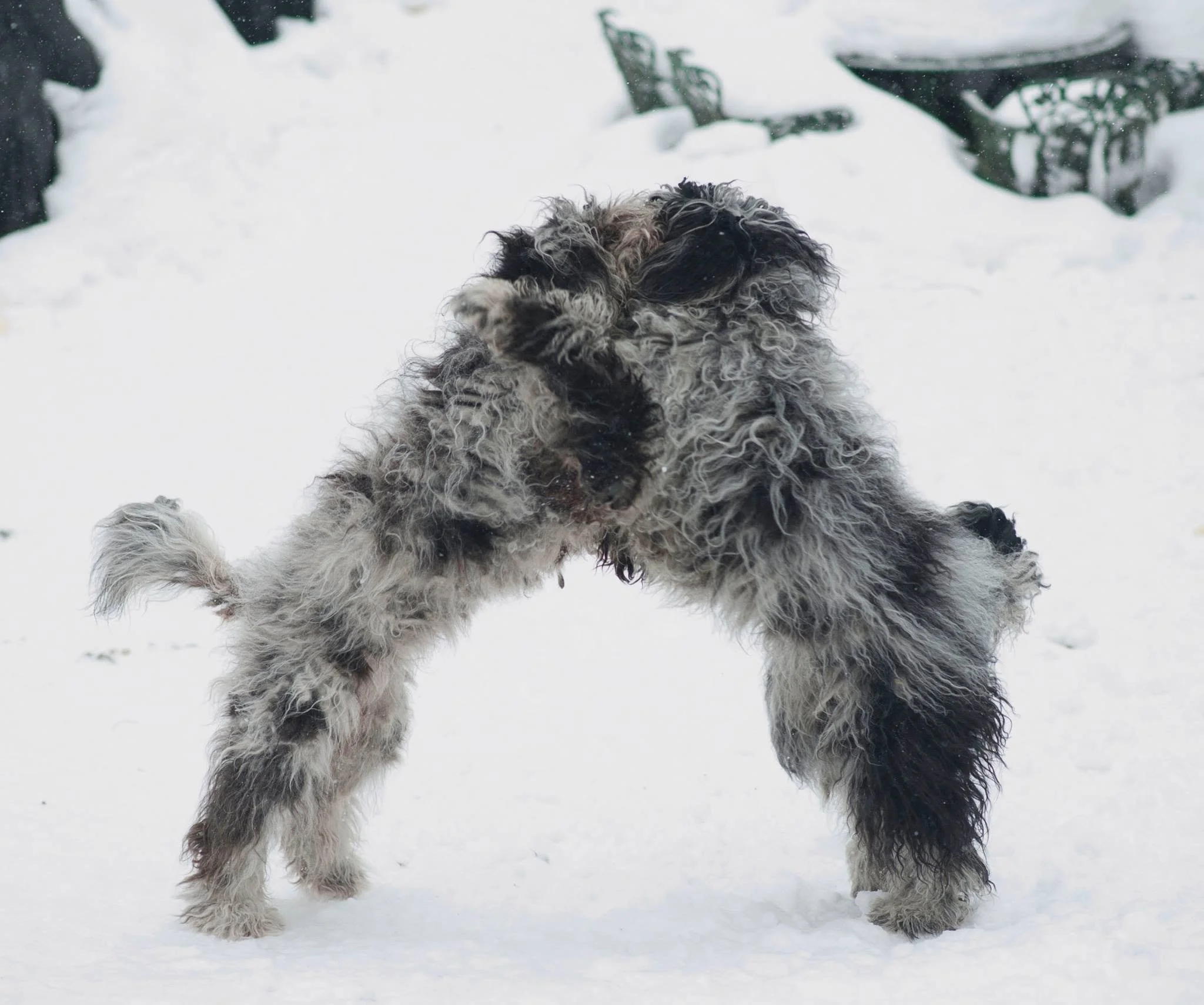
Bergamascos in winter. Bergamasco teens playing in snow. The coats are in transitional phase and can hold dampness but likely only the surface. This would not require much other than a place to dry off naturally.
Bathing Is One Thing. Real Life Is Another.
A full bath is the obvious example, but baths are not the only issue. Most Bergamascos are not getting bathed every week. The bigger day-to-day situation is just real life.
Rain. Snow. Wet grass. Mud. Humidity. Pond water. Slush. That lovely combination of spring thaw and regret.
A Bergamasco can get damp without being technically “bathed,” and that moisture still has to go somewhere. In a young puppy coat, this may not be a huge event. In an adult coat, especially one with more developed flocks, it matters more.
This is especially important if the dog is going into a crate, a car, a closed room, or settling for the night. A damp dog in a space without airflow is where problems can start. It does not mean you need to panic every time your dog walks through wet grass, but it does mean you should think about airflow and drying as part of normal coat care.
Why Drying Matters
The issue is not that a Bergamasco must be kept pristine and fluffy. This is a rustic breed. They are supposed to be dogs, not upholstered furniture.
But a coat that stays damp too long can lead to odor, skin irritation, mildew type smells, and coat that becomes harder to manage. Sometimes people think the breed “smells,” when really the dog was not dried well enough or the coat stayed damp too long.
If a Bergamasco starts to have a mildewy smell, it is often not coming from the outside of the coat. It is coming from the interior, where moisture has stayed trapped too long. This can be frustrating because the natural instinct is to bathe the dog again. I understand why people do that. If a dog smells, it seems logical to wash the dog.
But with this type of coat, another bath is not always the answer. If the coat is not dried thoroughly afterward, more bathing can actually keep adding moisture to the same problem. The goal is not just to clean the coat. The goal is to make sure the coat gets completely dry inside.
There is a difference between a natural coat and a coat that has not had the chance to dry properly and you can smell it a mile away.
The Bergamasco coat should not need constant fussing, but it does need common sense. Drying is one of those boring little management things that makes a big difference.
Puppies Are Different From Adults
A Bergamasco puppy coat is not the same as an adult coat. What works at five months may not work at two years. This is where people can get fooled.
A puppy gets wet, you towel them off, they run around like a lunatic, and everything seems fine. Then the adult coat starts developing, and suddenly drying takes longer, the coat holds more moisture, and the dog does not bounce back to dry in the same way.
That is normal. It does not mean something is wrong with the coat. It just means the coat is changing, and your routine has to change with it.
The teenage coat phase is also its own little circus. The coat is forming, separating, changing texture, and generally looking like it has legal problems. This is not the time to panic or let a groomer “fix” it. It is the time to be patient, learn what is normal, and help the coat develop the way it is meant to.
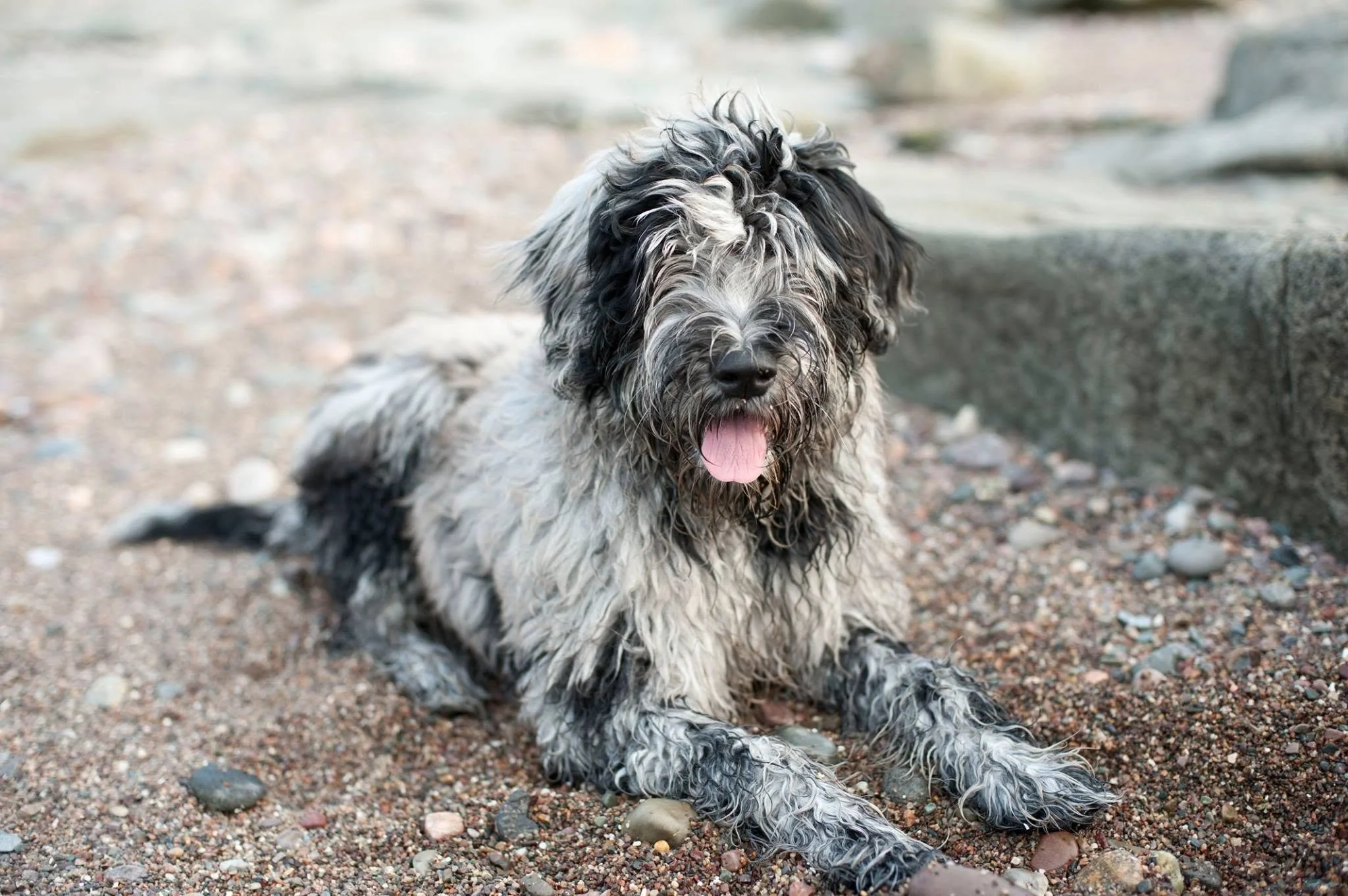
Bergamasco in summer. Young Faggia playing on the beach in Nova Scotia. The puppy coat can be bathed quickly and easily like any other coat until the mats start to form at around 8 months to a year old. She may have smelled like seaweed after this, but a quick dip in the dog sink and a towel dry is all that is needed for a puppy.
What Helps
You do not need a salon in your house, but you do need a plan.
For everyday dampness, things are usually pretty simple. If the dog has been out in the rain, walked through snow, or come in damp from wet grass, I usually focus on airflow and a warm, dry space. Often, a fan in the room is enough for a lightly damp dog. A dehumidifier can work wonders too. The fan and dehumidifier can tag team most casual dampness very well.
This is different from drying a Bergamasco after a full bath. A bath soaks the coat much more thoroughly, and that needs a more serious setup.
Towels help, especially at first. Get as much surface moisture off as you can. I squeeze and blot the coat rather than rub it. Airflow matters more than people realize. A high velocity dryer is essential. You are trying to move air through the coat and get moisture out.
A grooming table can make life easier if the dog is trained to stand calmly on it. Warm, dry air helps. Time helps. Patience helps. A sense of humor is probably required.
What does not help is assuming the coat will magically take care of itself because it is “natural.”
Natural does not mean no maintenance. It means the maintenance is different.
Things I Have Learned to Avoid
I would not put a damp Bergamasco into a crate for the night and assume everything will be fine.
I would not bathe an adult Bergamasco unless I had the time and setup to dry the dog properly.
I would not hand the dog to a groomer who does not understand the breed and tell them to “just give him a bath,” then bring the dog home wet without a proper drying setup.
And I would be very careful about letting someone brush, blow out, strip, shave, or trim the coat into something it is not supposed to be just because they are uncomfortable with a coat that does not behave like every other dog coat. Keeping your dog in a short or clipped coat is absolutely fine, but ask your breeder first so they can guide you with this.
Bergamascos are not doodles. They are not Old English Sheepdogs. They are not Komondors. They are Bergamascos. The coat has its own rules, and once you understand those rules, it becomes much easier to live with.
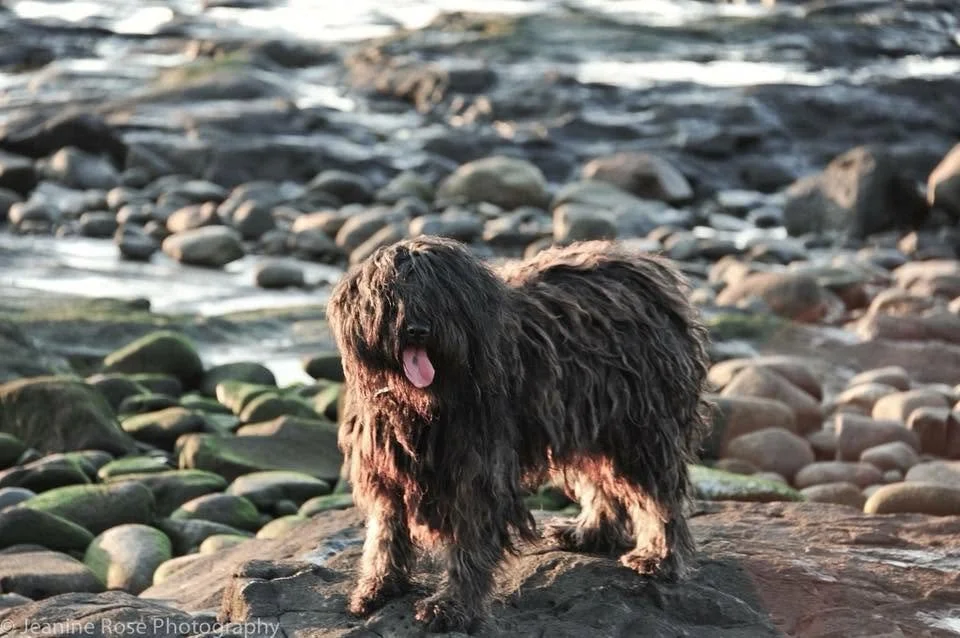
Mezza in a newly flocking coat around age 2. The coat is still short enough to avoid getting wet for beach walks. Her feet and legs will dry quickly at home as the flocks are small and her toes are trimmed.
The Big Picture
A Bergamasco coat is very manageable when people understand what it is and what it needs. The trouble usually starts when people either overdo everything or ignore everything. The sweet spot is somewhere in the middle: understand the coat, respect it, keep the dog comfortable, and do not create a damp barn rug situation in your living room.
The Bergamasco is a rustic, practical, intelligent breed. The coat is part of that history and part of that identity. It does not need to be fussed over constantly, but it does need to be cared for properly.
And sometimes proper care is as simple, and as unglamorous, as making sure the dog is actually dry.
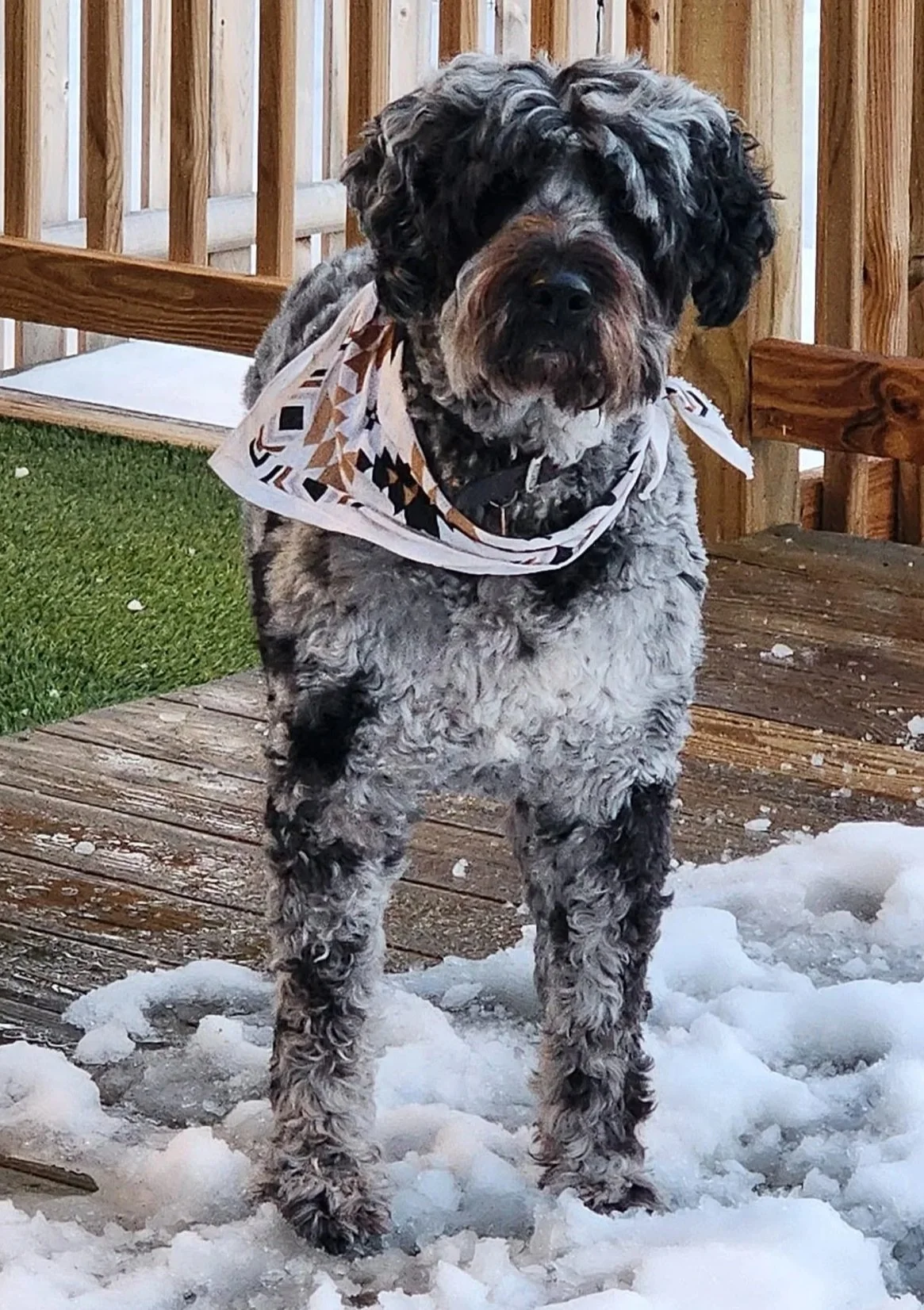
Adult Bergamasco in short clipped coat. Only a towel dry is needed.