

Raising Singleton Puppies

Updated: 3 days ago
Raising Singleton Puppies: Lessons Learned from a Year of Experience
Over the past year, I’ve had the unique experience of raising two singleton puppies ,one from our Chinese Crested, Juni, and one from our Bergamasco, Martensa. These rare and challenging circumstances have taught me a great deal, and I’d like to share what I’ve learned. Whether you’re a breeder facing a singleton birth or the lucky new owner of a singleton puppy, I hope these insights will be helpful.
What Makes a Singleton Unique
A singleton puppy is born without littermates entering the world with only their mother and human caregivers for company. This is significant, as puppies are biologically and behaviorally designed to be born into litters. The stimulation, competition, warmth, and social interaction provided by littermates play a critical role in normal development.
The canine uterus is structured with horns to carry multiple puppies. When only one puppy develops, it often doesn't trigger labor naturally due to insufficient hormonal cues. This can lead to prolonged pregnancies, placental insufficiency, or the need for a C-section. Singleton puppies also tend to be larger than average, making natural delivery more difficult or even impossible.
Birth and Early Feeding Challenges
In our experience, both singleton puppies were delivered via planned C-section. Sometimes, milk production is delayed following surgery, especially when there's only one nursing pup. In such cases, temporary bottle feeding may be required until milk production is well established.
Every puppy is different, and advance planning with your veterinarian is essential to determine the safest delivery method and immediate care needs. With singletons, preparation is key.

The Role of Stimulation and Warmth
In a typical litter, puppies climb over each other, generating warmth and providing essential gut stimulation. This activity promotes intestinal peristalsis ,a critical function for puppies who rely on their mother to eliminate waste. A singleton, lacking this contact, may require external massage multiple times a day to mimic the role of littermates.
We used microwavable stuffed animals to provide warmth and simulate the comfort of a litter pile. Standard heating pads were not always sufficient, especially when the mother was away from the box.
Monitoring Weight Gain and Preventing Overfeeding
One of the most critical challenges we encountered was excessive weight gain. In a litter, puppies compete for teats, with stronger ones often dominating the best milk sources. A singleton faces no such limitation, they have unlimited access to milk.
This can quickly lead to overfeeding, creating a risk of obesity and related health issues. We closely monitored daily weight, limited nursing time, and even dressed the dam in a t-shirt to restrict access after feedings. To manage the dam’s milk production and avoid mastitis, we controlled her diet, offering normal hydration but no increase in postnatal caloric intake.

Toileting and Stimulation
Where most puppies begin eliminating on their own by 2 weeks, singleton puppies may not do so until 3 weeks or later. We continued to provide external stimulation through gentle massaging and brushing, as well as handling that mimicked the touch and activity of siblings
Preventing Swimmer Syndrome
Overweight puppies who remain in a prone position are at risk for swimmer syndrome, a condition where the puppy’s limbs splay out sideways, preventing normal movement. To prevent this:
We placed the puppy on rolled towels or stuffed animals to lift the chest off the floor.
We used egg crate foam padding in the whelping box to create an uneven surface that builds muscle strength and encourages proper limb positioning.
These proactive measures allowed our puppies to begin walking and crawling just a week behind typical milestones.


Simulating Litter Dynamics
Without littermates, a singleton misses out on vital behavioral development — especially frustration tolerance and social boundaries. Puppies in litters are frequently jostled off teats, have to compete for space, and learn persistence.
To replicate this, we:
Used stuffed animals to gently displace the puppy during nursing.
Provided daily frustration exercises to build resilience.
Introduced various textured surfaces to encourage movement and traction.
These small but meaningful interventions help mitigate behavioral issues that can arise later in life due to lack of early social experiences.
Once the puppy is 2 weeks old, they are fat, fatter than they normally would be and this makes it harder to move around. Puppies are often on their feet at around 2 weeks just starting to army crawl around and open their eyes at the same time. Singletons are too heavy to get on those legs and often don’t meet this milestone. Many of them not walking or on their legs until weeks later. To help with this we use egg crate foam. I buy a twin mattress of egg crate foam and cut into squares. This becomes the base of the whelping box. The dips in the foam build strength in the legs and force them to exercise. As a result, they build leg strength and lose a little weight at the same time. I use this foam at the whelping box base for the next 2 weeks.
Weaning a Singleton
Weaning a singleton can also present difficulties. With no competition for milk and no discomfort from nursing multiple teething puppies, dams are often content to continue nursing much longer than usual.
We gradually reduced nursing sessions and supplemented meals with a mix of:
Moistened kibble
Royal Canin Puppy Mousse
Goat’s milk
We fed the dam and puppy together to encourage mimicry. Eventually, we separated them for short periods so the puppy would become hungry enough to explore solid food. In our case, weaning was complete closer to 6–7 weeks — later than typical.

Crate Introduction and Socialization
We introduced the crate at around 4 weeks, creating a positive and stimulating environment with toys, textures, and consistent human interaction. By keeping the puppy in our main living space, they became familiar with the routine and energy of our household.
As teeth came in, we allowed safe interactions with our adult dogs, who helped teach bite inhibition and social boundaries in a natural, non-threatening way.
Overcoming the Social Deficit
One of the biggest concerns with singleton puppies is the lack of early socialization with littermates. Puppies learn:
Bite inhibition
Social signaling
Conflict resolution
Pack dynamics
Ideally, a singleton would be integrated into another litter of the same age and size. While we didn’t have that opportunity, we utilized our own pack. Our gentle adult dogs served as playmates and teachers. For instance, our small Chinese Cresteds taught our Bergamasco puppy how to respect smaller dogs, while our larger dogs provided multiple dog play and boundary-setting for our singletons.
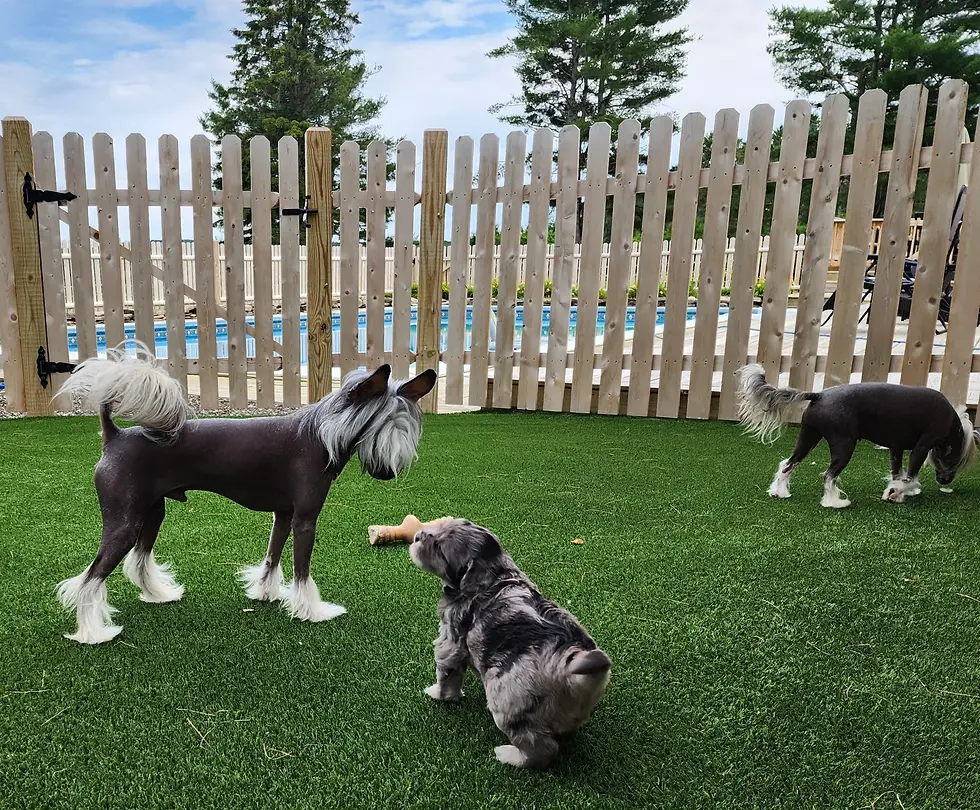
Raising a singleton puppy is undoubtedly more challenging than raising a full litter. It requires constant observation, creativity, and thoughtful intervention. However, the reward is a deeply bonded, well-adjusted puppy who, despite their unique start, thrives just as well ,if not better than their litter-born peers.
With the right knowledge, preparation, and support, singleton puppies can go on to live happy, healthy lives. And for the breeder or owner willing to invest the time and care, the connection formed with a singleton is truly one-of-a-kind.


Comments